
Walking and Screen-Free Breaks
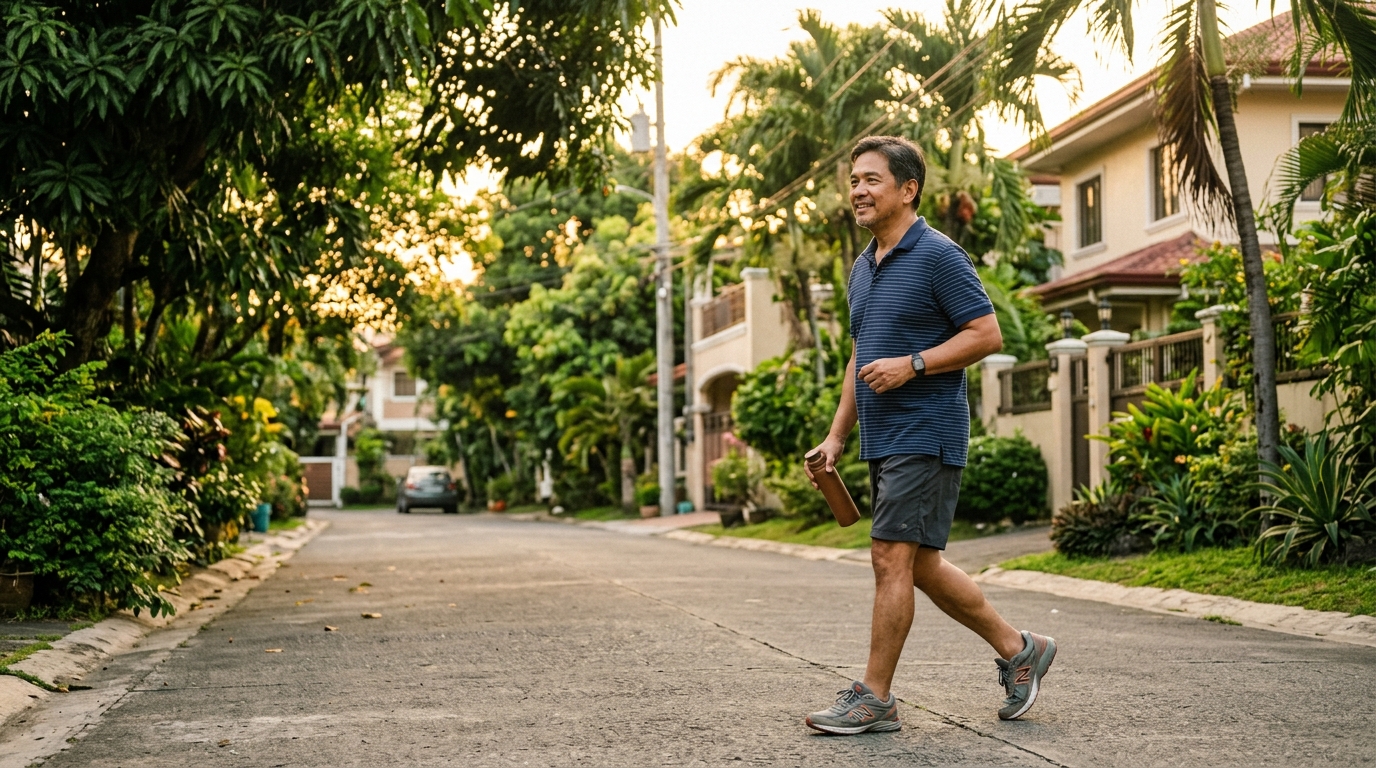
Walking is one of the most accessible physical activities for mature adults. Beyond cardiovascular and metabolic benefits, walking outdoors provides your visual system with something indoor rooms cannot: wide-open panoramic sightlines, natural daylight, and relaxed distance focusing.
Why Walking Rests Your Eyes
When you spend hours inside a home or office, your maximum viewing distance is bounded by walls—often only 3 to 5 meters. Over time, your visual attention narrows into a tight tunnel.
Stepping outside immediately expands your peripheral field. As you walk, your visual system naturally observes objects hundreds of meters away: passing clouds, tall trees, streetscapes, and moving vehicles. This natural optic flow gently stimulates peripheral photoreceptors while allowing the internal focusing muscles to remain completely disengaged.
Philippine Walking Settings
You do not need access to an expensive private track or nature preserve. Realistic Philippine walking environments include:
- Subdivision and Barangay Loops: Quiet residential side streets in areas like Quezon City, Marikina, Davao, or Cebu provide safe, familiar footpaths.
- Community Parks and Plazas: Many towns and cities have public municipal plazas (such as Quezon Memorial Circle, Cebu Fuente Osmeña, or People's Park in Davao) with shaded tree canopies.
- Errand Walks: Walking to the neighbourhood sari-sari store, bakery, or local parish church turns daily chores into purposeful eye-rest strolls.
Timing and Tropical Weather Considerations
In the Philippines, midday heat and ultraviolet (UV) radiation can be intense. Protecting your overall comfort and eye safety requires smart timing:
Morning (6:00 AM – 7:30 AM): Cool ambient temperatures, gentle early sunlight, and quiet neighbourhood streets.
Late Afternoon (5:00 PM – 6:15 PM): Shaded golden hour light, lower UV index, and refreshing breezes before sunset.
Avoid walking between 10:30 AM and 3:30 PM under direct noon sun. Wear a wide-brimmed sun hat or UV400 sunglasses if walking in bright sunlight.
Structuring Screen-Free Breaks During the Day
When you cannot take an outdoor walk, integrate short screen-free pauses indoors:
- The Tea / Water Habit: Whenever you refill your drinking cup, leave your smartphone behind. Drink slowly while looking out a window.
- The Household Chore Buffer: Do 10 minutes of light gardening, folding laundry, or tidying a room without listening to phone audio or watching video feeds.
- The Music Pause: Sit in a comfortable chair with your eyes gently closed while listening to a favorite album or radio program.
Low-Mobility and Rainy-Day Alternatives
If joint discomfort, bad weather, or limited mobility makes outdoor walking difficult, you can still achieve distance viewing:
- Stand or sit by an open covered veranda or balcony overlooking the road.
- Take slow, gentle steps back and forth along your hallway while gazing toward the open end of the corridor.
- Engage in seated shoulder rolls and gentle neck stretches while focusing your eyes on the farthest corner of the room.
Educational Boundary & Medical Disclaimer
The information published on Vision Nutrition Flow is for independent educational purposes to support everyday visual comfort, healthy sleep habits, and gentle physical activity after age 50. Lifestyle habits do not diagnose, treat, prevent, or cure any eye disease, nor do they eliminate refractive errors or replace prescription glasses. Persistent eye strain, pain, sudden vision changes, or recurring dryness require assessment by a licensed eye-care professional (optometrist or ophthalmologist). Sudden loss of vision requires immediate emergency medical attention.